Fitness & Nutrition News

Stay up to date with the latest research, tips, and trends in fitness, nutrition, and weight management.

fitness 17 hours ago

H9N2 avian influenza case reported in Lombardy, Italy

The Italy Ministry of Health reports that the Lombardy Region has identified a case of infection with the low-pathogenicity avian influenza A(H9N2) virus of animal origin, in a individual with concomitant illnesses, who came from a non-European country (imported) where he contracted the infection, and is currently hospitalized.

Outbreak News Today Read more →
fitness 17 hours ago

Epigenetic memory of colitis promotes tumour growth

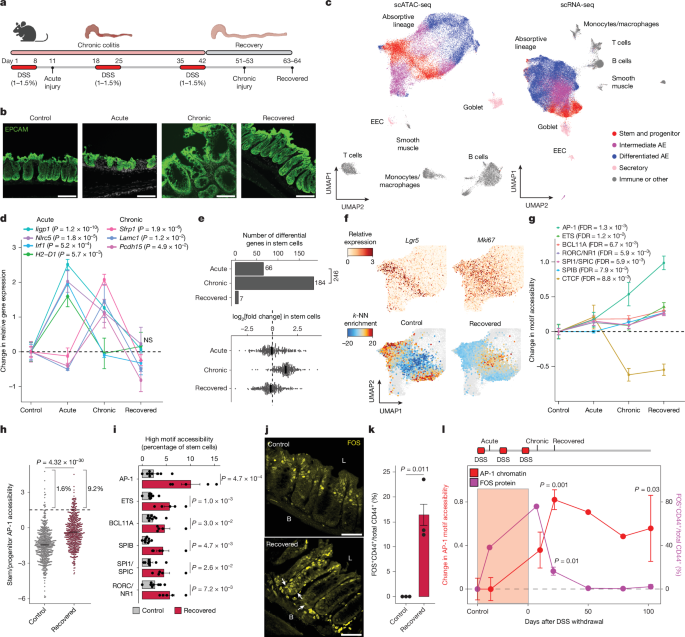
Chronic inflammation is a well-established risk factor for cancer, but the underlying molecular mechanisms remain unclear1,2. Using a mouse model of colitis, we demonstrate that colonic stem cells retain an epigenetic memory of inflammation following disease resolution that persists for more than 100 days. Here we find that memory of colitis is characterized by a cumulative gain of activator protein 1 (AP-1) transcription factor activity, with durable changes to chromatin accessibility. Further, we develop SHARE-TRACE, a method that enables simultaneous profiling of gene expression, chromatin accessibility and clonal history in single cells, enabling high-resolution tracking of epigenomic memory. This approach reveals that memory of colitis is propagated cell-intrinsically and inherited through stem cell divisions, with some clones demonstrating stronger memory than others. Finally, we show that colitis primes stem cells for increased expression of an AP-1-regulated gene program following oncogenic mutation that accelerates tumour growth, a phenotype dependent on AP-1 activity. Together, our findings provide a mechanistic link between chronic inflammation and malignancy, revealing how long-lived epigenetic alterations in regenerative tissues may contribute to disease susceptibility and suggesting potential diagnostic and therapeutic strategies to mitigate cancer risk in patients with chronic inflammatory conditions. Colonic stem cells retain a memory of inflammation following disease resolution and there is a mechanistic link between chronic inflammation and malignancy, suggesting potential strategies to mitigate cancer risk in patients with chronic inflammatory conditions.

fitness 17 hours ago

Functional hierarchy of the human neocortex across the lifespan

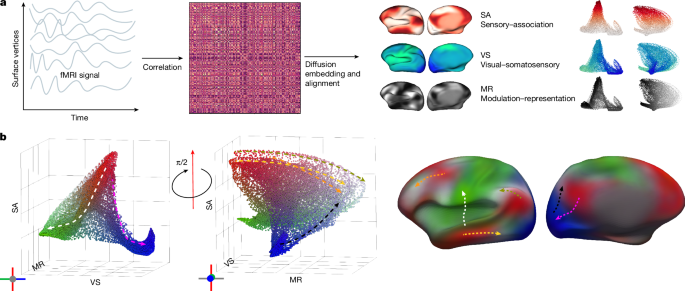
Large-scale gradients of functional connectivity between brain areas organize the human neocortex, linking brain topography to the texture of cognition1,2. In adults, three dominant axes—sensory–association, visual–somatosensory and modulation–representation—run, respectively, from primary sensory to transmodal association areas, from visual to body-centred systems and from control and attention networks to default mode and sensory areas1–4. These gradients provide a compact description of large-scale cortical hierarchies that underlie distinct modes of information processing. However, how these gradients and their multiscale biological and cognitive correlates evolve across the lifespan is unknown. Here we establish a continuous normative reference of functional organization from birth to 100 years of age, revealing complex, nonlinear developmental trajectories. Gradient architecture is anchored by primary sensory systems in infancy, differentiates along association and control axes during childhood and adolescence and gradually dedifferentiates during ageing. The importance of this functional architecture is corroborated by biology and behaviour: gradient metrics predict cognitive performance across development; structure–function coupling varies by axis and age; and distinct transcriptomic signatures are strongest early in life and weaken with age, consistent with a transient genetic scaffold for gradient architecture. Our lifespan gradients unify diverse research into developmental brain connectivity and provide a shared multimodal reference for future studies. fMRI data from individuals of a wide range of ages (from a few days to 100 years old) are used to map the key organizational axes of functional connectivity in the human cortex throughout the lifespan.

fitness 17 hours ago

Passion fruit-derived molecule shows promise as a future Alzheimer's drug candidate

Four years ago, a research group at the University of Oslo made what would turn out to be a major discovery. They found that an extract from passion fruit had the potential to slow the development of Alzheimer's disease. What is it about this small fruit that might promote healthy aging and slow the progression of dementia? The researchers have now made an exciting new discovery that could significantly accelerate the search for a medicine against Alzheimer's disease. "After four years of hard work, we have managed to uncover what the passion fruit's secret is," says Associate Professor Evandro Fei Fang-Stavem at the University of Oslo and Akershus University Hospital.

Medical Xpress Read more →
fitness 17 hours ago

Dominant clones leverage developmental epigenomic states to drive ependymoma

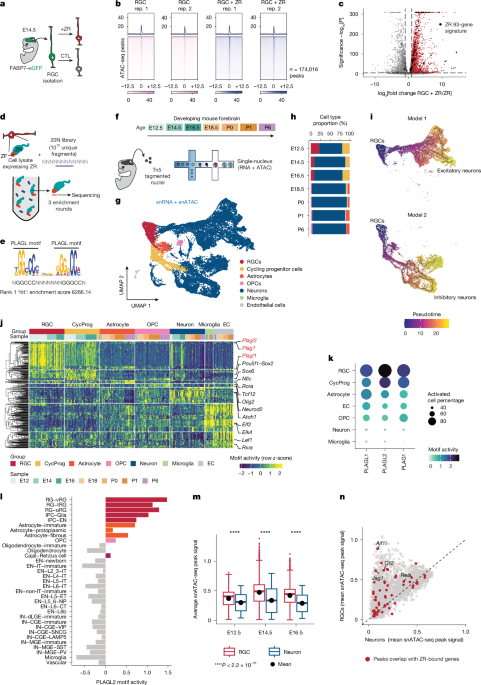
ZFTA–RELA is the most recurrent genetic alteration seen in paediatric supratentorial ependymoma (EPN) and is sufficient to initiate tumours in mice1. Despite its oncogenic potential, ZFTA–RELA (ZR) is observed nearly exclusively in childhood EPN, with tumours located distinctly in the supratentorial brain of the central nervous system1. We proposed that specific chromatin modules accessible during brain development would render distinct cell lineage programs at direct risk of transformation by ZR. To test this hypothesis, we performed combined single-nucleus assay for transposase-accessible chromatin and RNA (snMultiome) sequencing of the developing mouse forebrain compared with ZR-driven mouse and human EPN. We demonstrated that specific developmental lineage programs present in transient progenitor cells and regulated by PLAG/L family transcription factors were at risk of neoplastic transformation. Binding of this chromatin network by ZR or other PLAG/L family motifs targeting fusion oncoproteins led to persistent chromatin accessibility at oncogenic loci and oncogene expression. Cross-species analysis of mouse and human ZR EPN revealed significant cell type heterogeneity indicating incomplete neurogenic and gliogenic differentiation, with a small percentage of cycling progenitor-like or radial glial-like cells that established a putative tumour cell hierarchy. In vivo lineage tracing studies identified neoplastic clones that aggressively dominated tumour growth and established the entire EPN cellular hierarchy. These findings identify developmental epigenomic states that are critical for fusion-oncoprotein-driven transformation and show how these states continue to shape tumour progression. Single-nucleus chromatin and RNA sequencing identifies epigenetic chromatin domains that confer vulnerability to paediatric brain tumours such as ependymomas, providing insight into the development of such tumours despite ‘quiet’ genomes.

Achievement Unlocked!